

If you have searched "budget e-bike" on Amazon, you have almost certainly seen Ancheer. Their bikes sit right at that tempting price line where you think, "For this money, how bad can it be?"
This Ancheer electric bike review looks past the sales page and into real shop experience. It pulls from hands-on repair work, rider feedback from 2023 to 2025, and real-world tests of models like the Commuting eCruiser and newer 500 to 1000 watt setups.
By the end, you will know the real pros, the painful cons, and whether an Ancheer is a smart buy for you or a headache waiting to happen.
Ancheer electric bike review overview: what you really get for the price
Ancheer is a budget e-bike brand that sells mostly through Amazon and similar sites. Many of their bikes use generic Chinese frames and components that different sellers can rebrand, so listings change often while the core design stays very similar.
Prices are very low compared to bikes from long-standing brands. You can often get a full-size electric mountain or city bike for what some companies charge just for a battery. On paper, you see:
- Rear hub motor
- Removable lithium battery
- Front suspension
- Disc brakes
- Shimano gears
To a first-time buyer, it can look like a steal. Reviews for models such as the Power Plus mountain bike often highlight that "you get a lot for the price," which matches what you see in detailed breakdowns like this Ancheer Power Plus electric mountain bike review.
The catch shows up later. In repair shop scoring, the Ancheer Commuting eCruiser landed around 39 out of 100 and was marked “not recommended.” Materials and mechanical quality came in very low, and the bike scored zero on low-maintenance design. Comfort and fit were decent, but longevity and serviceability dragged the total score down.
So you get a nice first ride for not much money, but you also take on a higher risk of problems, especially after the first season.
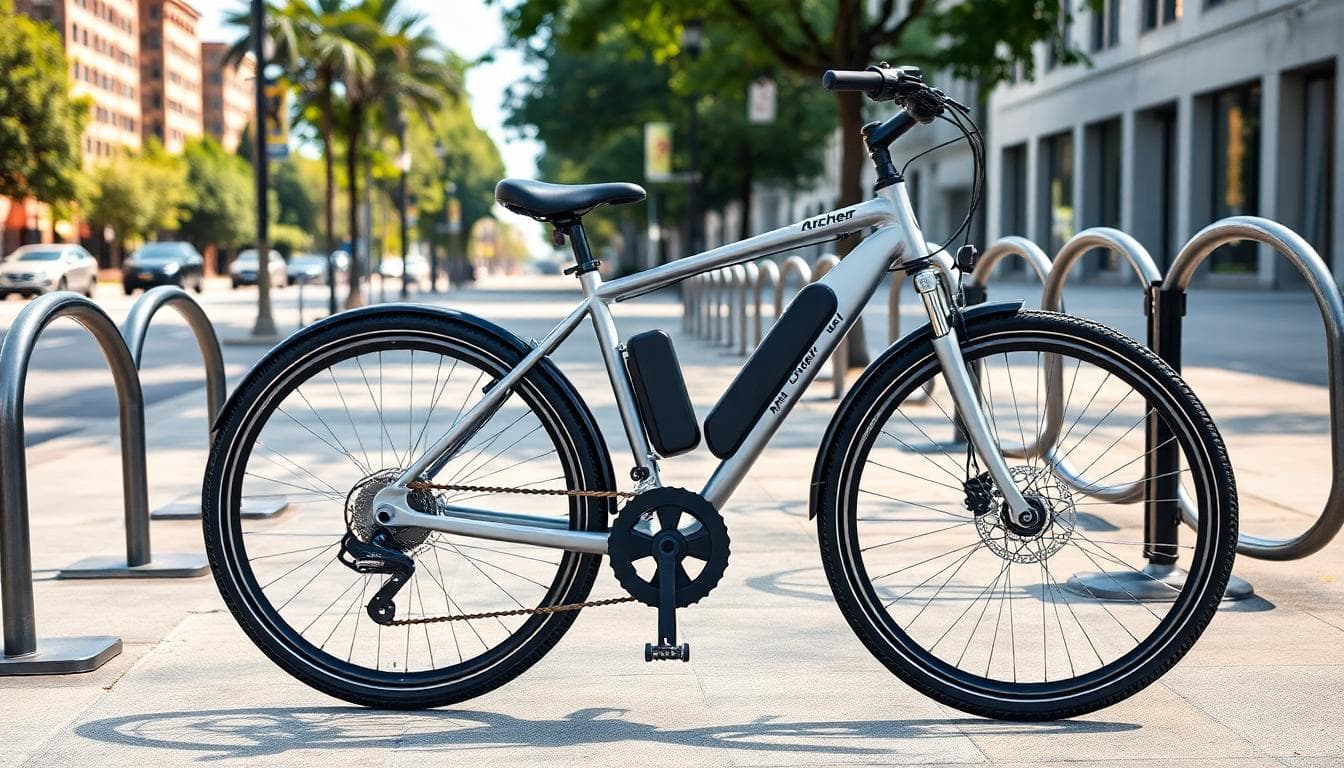
Photo realistic image of an Ancheer-style electric commuter bike in a city setting. Image created with AI.
Who this Ancheer electric bike review is for
This review is written for riders who are:
- Thinking about their first budget e-bike
- Comparing a few Ancheer models on Amazon
- Interested in honest e-bike reviews that do not stop at the spec sheet
Whether you are looking at a city cruiser, a folding bike, or an Ancheer mountain-style model, the same themes keep popping up: low price, solid first impressions, and questionable long-term value. This guide helps you decide if that trade-off works for your situation.
Key takeaways from our Ancheer testing and repair shop experience
Here is the big picture from shop floors and real use:
- Very low upfront cost: Often half the price of entry-level bikes from bigger brands.
- Comfort and range are decent at first: Upright posture, okay saddles, and usable range out of the box.
- Low mechanical quality on many parts: Cheap derailleurs, weak pedals, and generic tires mean more tuning and more flats.
- Underpowered motors on some models: Especially 250 watt versions, which struggle on steep hills or with heavier riders.
- Cheap batteries with generic cells: Range can drop sharply within months if you ride often.
- High maintenance risk: Some designs are hard to service, and certain bikes are basically disposable once major electronic parts fail.
If you view an Ancheer as a 1 to 3 year experiment, this can be acceptable. If you expect a 5 to 10 year daily driver, it becomes a problem.
Specs and features: what most Ancheer electric bikes offer on paper
On the spec sheet, many Ancheer bikes look surprisingly strong for the price. Typical features on current 2025 models include:
- 250 to 500 watt rear hub motor (some claim 750 watt peak)
- 36 volt or 48 volt battery from 8 to about 12.5 amp-hours
- Aluminum alloy frame with front suspension fork
- 21-speed Shimano drivetrain
- Mechanical disc brakes
- Basic LED or color LCD display
Newer higher power models also add features like cruise control and brighter screens, as seen in long-form tests like this 2025 Ancheer electric bike review from BoltBikers.
On a listing, this package can seem close to what you get on a bike that costs twice as much. The real differences hide where beginners do not usually look: inside the battery pack, in the quality of the tires and braking hardware, and in how the wiring and connectors are routed.
Motor, battery, and range: power vs longevity
Most Ancheer e-bikes use simple rear hub motors rated at 250 to 500 watts, with some ad copy talking about 750 watt peak. For flat city streets and light paths, that works fine. You get relaxed cruising around 15 to 20 mph with pedal assist.
The Commuting eCruiser is a good example. It uses a 250 watt rear hub motor paired with a 36 volt 12.5 amp-hour battery. On paper, that gives good range, and early range scores around 5 out of 10 match that claim. In real use on San Diego hills, the motor felt weak. Even in the lowest gear with assist at max, it struggled on steeper grades.
Battery packs are where long-term value really shows. Many Ancheer packs use non-branded Chinese cells rather than Samsung, LG, or Panasonic. That keeps the price low but hurts cycle life. Riders often report strong range for the first months, then a noticeable drop. For daily riders, it is common to see real-world range cut almost in half within a year.
So while Ancheer advertises 25 to 40 miles of pedal-assist range for many models, that number is often optimistic over time, especially if you:
- Ride in high power modes
- Weigh more than average
- Have lots of hills or stop-and-go traffic
Higher power 750 to 1000 watt models with 14 to 15 amp-hour batteries, like the fat-tire style bikes, can feel much stronger. The trade-off is that they pull harder on those same budget cells, which can speed up aging if you ride them hard.
Frame, materials, and comfort: where Ancheer gets some things right
This is one area where Ancheer deserves credit. Many of their bikes use aluminum alloy frames, which helps keep weight manageable and reduces rust issues. The 26 inch Commuting eCruiser, for example, combines an aluminum frame with stainless steel spokes. That is a solid base for casual city use.
Comfort and fit scores for the eCruiser told a better story than the rest of the bike. It landed around 6 out of 10 for comfort and 7 out of 10 for universality. In plain terms, that means:
- Upright riding posture
- Step-through frame on some models
- Basic front suspension that smooths out small bumps
Most riders from around 5 feet tall and up can hop on, adjust the seat, and feel at home for short to medium rides.
The weak points show up in the contact points and rolling gear:
- Cheap plastic pedals that flex
- Generic tires that flat more easily and offer less grip in wet conditions
- Soft grips that wear or spin on the bar
All of these parts are replaceable, but if you start upgrading several pieces, the “cheap bike” quickly becomes less cheap.
Brakes, gears, and mechanical parts: the hidden weak links
Ancheer likes to highlight features such as mechanical disc brakes and multi-speed drivetrains. In theory, disc brakes are a nice upgrade over rim brakes, and extra gears help on hills.
In practice, the mechanical quality on some models scores very low, around 2 out of 10 in repair shop reviews. Common issues include:
- Low-end derailleurs that drift out of adjustment
- Freewheel rear hubs instead of stronger cassette setups
- Quill stems and other older style hardware that loosens over time
- No-name tires and tubes with thin sidewalls
Mechanical disc brakes on a heavy e-bike also need frequent tuning. As the pads wear, lever throw grows, so you have to keep tightening cables and adjusting calipers. Better commuter bikes use hydraulic disc brakes, which self-adjust as pads wear and give more consistent power at speed.
For a short-term, flat-terrain bike, Ancheer’s mechanicals are survivable. For a high-mileage commuter, they turn into a steady trickle of shop visits or home repairs.
If you want a deeper look at how Ancheer’s trail-focused setups hold up, it helps to compare with test rides like this Ancheer electric mountain bike review on Path and Paddle, where reviewers call out similar patterns: decent power on moderate climbs, but limits in component quality.
Real world performance: how Ancheer electric bikes ride day to day
Specs only tell part of the story. Here is how Ancheer bikes tend to feel over a week or month of normal riding.
Hill climbing and speed: fine on flats, weak on steep hills
Most Ancheer e-bikes are tuned for basic city speed, not serious climbing. On flat ground, a 250 or 350 watt hub motor moves you along nicely with light pedaling. Casual riders often enjoy the relaxed 15 to 18 mph pace.
On steep hills, the story changes:
- The Commuting eCruiser bogged down on San Diego hills even in low gear.
- Riders had to stand up and push hard on the pedals to keep moving.
- The motor quickly felt strained, especially with heavier riders.
Newer 500 watt models perform better on mild and rolling hills. They are workable in most suburbs and small towns. If you live in a very hilly city or plan to carry cargo, they still fall short of what a strong mid-drive or high-torque hub motor from a premium brand can do.
Range and battery life: good at first, then may fade quickly
Many Ancheer listings promise 25 to 40 miles of pedal-assist range. In early tests, that range is often realistic if you:
- Use lower assist levels
- Ride mostly on flat paths
- Weigh under about 200 pounds
The Commuting eCruiser scored mid-pack on range, about 5 out of 10. It used a relatively big 12.5 amp-hour battery with a modest 250 watt motor, which helped stretch distance.
The long-term risk sits in the battery chemistry. Packs that use generic cells can lose capacity fast. For a frequent rider, it is not rare to see:
- Noticeable drop in range after 3 to 6 months
- Half the original range after a year or so of heavy use
By contrast, bikes that use name-brand cells like Samsung, LG, or Panasonic usually keep most of their range for several years. That difference changes the true cost of ownership. A cheap bike that needs a new battery every year or two can end up costing more than a pricier bike that keeps the original pack for 4 to 6 years.
If you want to see how newer higher capacity packs behave on a bigger motor, take a look at the 1000 watt RoverH style bike on Amazon. The ANCHEER 26" Electric Bike 1000W listing shows the typical specs for their newer fat-tire models: strong peak power, a 15 amp-hour battery, and higher claimed range.
Comfort and fit: upright, easy to ride, but limited adjustability
Most city and cruiser style Ancheer bikes share the same basic fit:
- Upright, relaxed posture
- Step-through or low-slope top tubes
- Saddles on the soft side
- Simple, swept-back handlebars
The eCruiser and similar frames fit a wide range of riders from about 5 feet up to the mid 6-foot range. That explains the decent universality scores around 7 out of 10.
Limitations show up for riders at the edges of that range or those with specific fit needs:
- Bar height and reach often have limited adjustment.
- Taller riders may feel cramped on longer rides.
- Shorter riders sometimes struggle to reach controls comfortably while still touching the ground.
Seats and stems can be upgraded, but again, every upgrade chips away at the original “great deal.”
Build quality, maintenance, and long term reliability: where budget hurts most
If there is one section to read carefully, it is this one. This is where the difference between a cheap e-bike and a good-value e-bike really appears.
Ancheer and other Amazon-style brands keep prices low by:
- Using cheaper hardware and fasteners
- Choosing generic tires, tubes, and cables
- Building frames that are not very mechanic-friendly
- Using wiring with few quick disconnects
The Commuting eCruiser showed this clearly in repair scoring:
- Around 3 out of 10 for materials quality
- Around 2 out of 10 for mechanical quality
- Zero out of 10 for low-maintenance design
Those numbers explain why many local bike shops either refuse these bikes or charge higher labor rates to work on them.
You can see similar warnings in some independent reviews of Ancheer’s mixed-terrain models, like this PCVarge Ancheer electric bike review, which praises the power for the price but flags long-term durability as a concern.
Materials and mechanical quality: scores that tell a clear story
On the plus side:
- Aluminum frames are fairly solid.
- Stainless spokes on some models help prevent rust.
On the downside:
- Plastic pedals and weak crank arms can creak or fail.
- Cheap grips tear and spin.
- Freewheel-style rear hubs are weaker and harder to upgrade than cassette hubs.
- Generic tires pick up glass and thorns more easily.
Each of these details might feel minor on its own. When combined, they create more flats, more noise, and more time spent chasing small problems.
Maintenance headaches: flats, brakes, and hard to find parts
Many Ancheer bikes use a rear hub motor that is hard-wired deep into the frame. There is no quick connector near the axle. That means:
- To fix a rear flat, you often need to partially disassemble the bike.
- Cables and zip ties have to be cut and then replaced.
- What should be a simple tire swap turns into a long job.
Some shops charge 100 dollars or more per hour for e-bike labor. Two or three small issues can turn a 600 dollar bike into a 1,000 dollar project in a short time.
Because of this, many mechanics quietly view certain Ancheer models as “landfill bikes.” If a controller, display, or motor fails out of warranty, the cost and effort to fix them just do not make sense for many owners.
For riders who use their bikes hard on trails or off-road, that can become a bigger problem, which is why some reviewers of Ancheer trail models suggest keeping riding fairly mild, as seen in several long-term tests linked from broader guides like this 2025 Ancheer overview.
Proprietary risk and support: what happens when something big breaks
Another hidden cost is proprietary risk. That means: if your exact model disappears from Amazon, can you still get the parts you need?
In scoring for the Commuting eCruiser, proprietary risk was around 4 out of 10. That is not as bad as a fully custom bike, but it is still high enough to worry about. Common problems include:
- Displays and controllers that only match one model year
- Battery cases that are unique to one frame
- Mounting points that do not match generic replacements
Ancheer changes listings often and does not have the same long-term support network as premium brands. Older models can become “orphans” where you can only keep them going by mixing parts from other bikes or buying random components from overseas sellers.
Pros, cons, and best alternatives to Ancheer electric bikes
At this point you can probably guess the outline, but it helps to see it laid out clearly.
For another angle on the same big-picture trade-offs, it is also useful to compare with third-party summaries such as this Ancheer electric bike breakdown from PCVarge, which balances the low cost with concerns over parts quality and support.
Pros: where Ancheer electric bikes make sense
Ancheer bikes do have real advantages:
- Very low purchase price compared to most e-bikes.
- Decent range at first, especially on lower-powered models.
- Light to mid-weight frames thanks to aluminum construction.
- Simple controls that beginners understand quickly.
- Removable batteries that you can charge indoors.
- Comfortable upright posture on many city and cruiser frames.
If you:
- Live on flat ground
- Plan to ride a few miles a week
- Are not sure if e-biking is for you
Then an Ancheer can act as a cheap test run. Think of it as a 1 or 2 year rental that you might resell or retire once you know how much you ride.
Cons: serious trade offs in safety, service, and lifespan
On the downside, and these matter more the longer you keep the bike:
- Low quality mechanical parts that need frequent adjustment.
- Weak hill climbing on 250 watt versions.
- Cheap batteries that lose range quickly.
- Hard to service designs, especially rear wheels and motors.
- Poor materials and mechanical scores in repair shop tests.
- Higher proprietary risk if listings change or support fades.
For daily commuters, heavier riders, or people in very hilly areas, these trade-offs are hard to justify. The bike you depend on to get to work should not feel like a short-term experiment.
Better options if you want a long lasting, low maintenance e-bike
If you are willing to spend more upfront, here is what to look for in a longer-lasting commuter or cruiser e-bike:
- Hydraulic disc brakes instead of mechanical.
- Branded battery cells like Samsung, LG, or Panasonic.
- Cassette-based drivetrains with mid-level Shimano or similar parts.
- Standardized displays and controllers from known suppliers.
- Frames with easy wheel removal and motor connectors near the axle.
- Clear warranty and dealer or service network in your region.
You can also compare Ancheer’s offer with other mid-tier bikes that still aim at value but test better across comfort, range, and reliability. Resources that score bikes by category, such as city, cruiser, or fat tire, make it easier to see which models hold up in real shop conditions, not just on marketing sheets.
Conclusion: is an Ancheer electric bike right for you?
Ancheer electric bikes pull people in with their price, and for good reason. You get a complete e-bike, with a motor and battery, for less than many high-end regular bikes. For casual riders on a tight budget, that can be enough.
The flip side is clear. You accept weaker parts, more maintenance, fading battery range, and higher risk that a major failure turns the bike into a parts donor instead of a long-term ride. Daily commuters, heavier riders, people in hilly areas, and anyone who wants a bike to last many years should think hard before choosing Ancheer.
If you see an Ancheer as a low-cost way to test e-biking, and you are comfortable with a shorter lifespan and possible repair hassles, it can work. If you want a reliable partner for serious riding, spending more now on a better-built e-bike will likely save you money, time, and stress down the road.


0 Comments